Vava'u does not have a single price tag. It has a range, and the range is wide, because this archipelago runs on small boats, family guesthouses and a handful of operators rather than an all-inclusive machine. A week here can cost as little as a modest city break or as much as a chartered sailing holiday elsewhere in the Pacific. What follows is a practical breakdown, built from what travellers actually spend, not from brochure numbers.
Getting there: the biggest single line
For most visitors, international flights into Tonga followed by a domestic hop to Vava'u is the largest cost of the whole trip, often more than everything else combined. Expect the domestic leg alone to run somewhere in the USD 150 to 250 return range depending on season and how far ahead you book, and note that schedules are thin: there is rarely more than one flight a day, sometimes fewer in shoulder months. Some travellers instead take the overnight ferry from Tongatapu, which is far cheaper (often under USD 50 one way) but adds a full day and a night at sea, and is weather-dependent. The practicalities, including which airlines fly the route and what the ferry timetable actually looks like in a given month, are covered in the journey into Vava'u by air and sea. Budget this leg first; it shapes what is left for everything else.
Where to sleep: from USD 20 to USD 300 a night
Accommodation spans a genuine spectrum. A simple room in Neiafu with a fan and shared bathroom can run USD 20 to 40 a night. A comfortable guesthouse or small hotel with hot water and a harbour view sits more around USD 60 to 120. Outer-island bungalow resorts, the barefoot-and-generator kind, typically land between USD 100 and 250 a night, sometimes including meals since there is nowhere else nearby to eat. Chartering a yacht for the week is its own budget entirely, often USD 300 to 600 a day depending on boat size and whether it is skippered, but it folds lodging and transport into one line. For a comparison of what you actually get in town versus on an outer island, see where to stay in Vava'u, and for the honest version of the outer-island promise, the barefoot outer-island resorts is worth reading before you commit a week's budget to a remote bungalow.
The whale is the product: budget for it properly
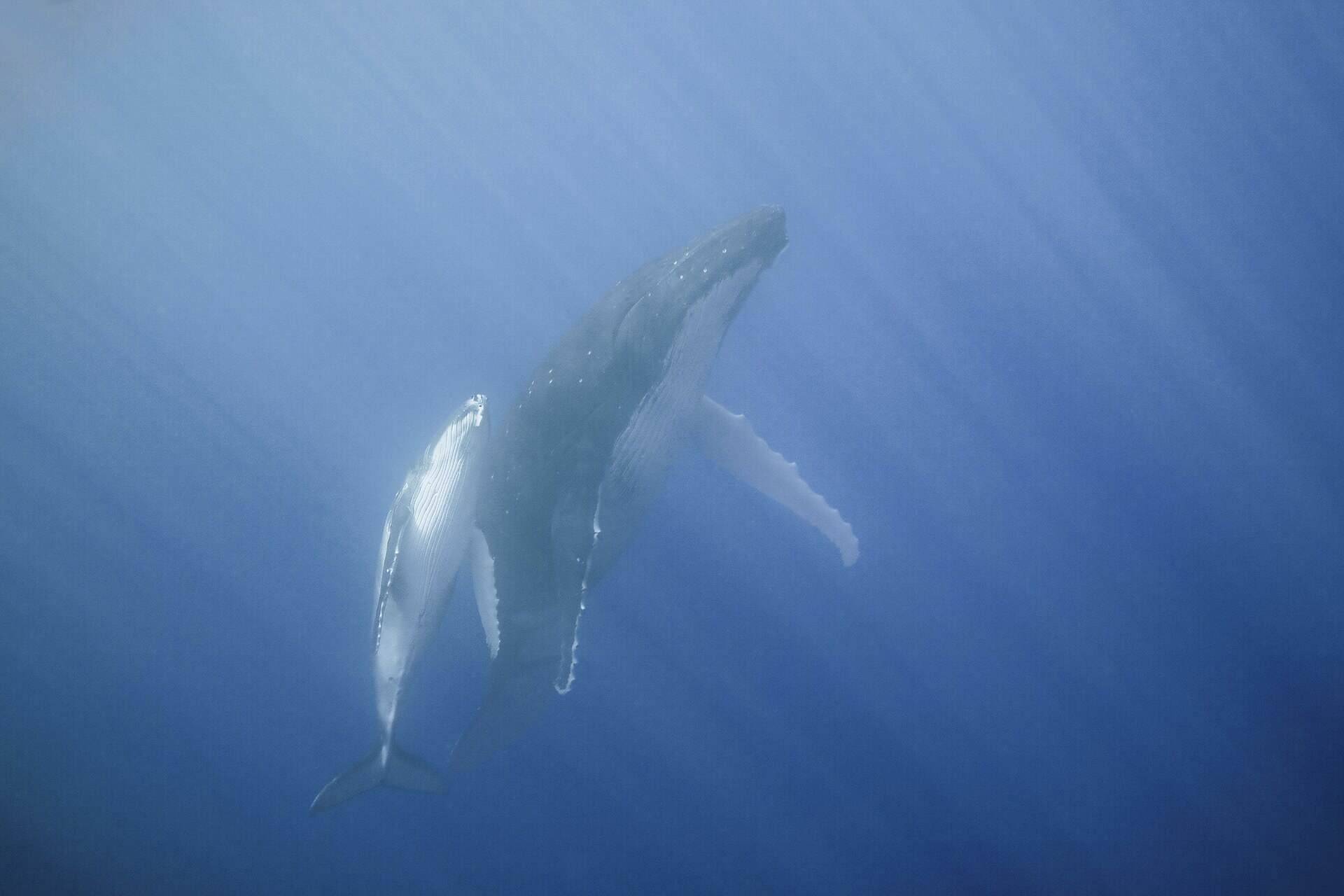
Swimming with whales is the reason most people come, and it is priced accordingly: a half-day tour typically runs USD 100 to 180 per person, full-day options somewhat more. This is not negotiable discretionary spending for most visitors; it is the main event, and the season (roughly July through October, with August and September usually the most reliable) dictates both price and availability. Boats fill up in peak weeks, so book ahead rather than assuming a walk-up spot. The rules governing these encounters, including group size limits set by regulation rather than operator preference, are explained in swimming with whales in Vava'u, and if you are choosing between operators, the questions that matter when picking a whale boat will save you from paying premium prices for a boat that overcrowds its trips.
Even on a tight budget, expect a realistic daily floor of about USD 60 to 80 per person once you include a basic room, three modest meals and local transport. Below that, you are likely skipping meals out or walking long distances to save on taxis.
Food, water and getting around
Eating at local restaurants in Neiafu runs roughly USD 8 to 15 for a main meal; self-catering from the market and small shops is considerably cheaper but limits variety, since fresh produce depends on what came in on the boat that week. Bottled or filtered water is worth budgeting for separately, a few dollars a day, as tap water is not generally recommended for visitors. Taxis around Neiafu are cheap, often a few pandanus (a dollar or two) for short hops, but outer-island transfers by boat add up: a return water taxi to a nearby anchorage might run USD 20 to 50 per person depending on distance and whether it is shared.
Day trips, caves and the extras that add up
Beyond the whale swim, the other signature day out is the caves circuit, typically a full day combining Swallows' Cave and Mariner's Cave, priced around USD 40 to 80 per person depending on whether it is a shared group boat or a private charter. It is worth doing properly rather than rushing: the caves day done right covers timing and what the entry to Mariner's Cave actually involves. A Sunday feast or kava session, if offered during your stay, usually runs USD 20 to 40 and is as much cultural as culinary; context on what to expect and how to behave is in Tongan culture for guests in Vava'u. These extras are easy to underestimate because each one looks small individually.
Three realistic weekly totals
Putting it together, per person, excluding international airfare: a lean week (basic room, self-catering, one whale swim, no charter) lands around USD 450 to 600. A comfortable mid-range week (guesthouse or small hotel, restaurant meals, one whale tour, one caves day) runs roughly USD 800 to 1,100. A higher-end week built around an outer-island resort or a short bareboat or skippered charter segment, with the whale swim and caves day included, typically reaches USD 1,500 to 2,500 or more. None of these figures include the domestic flight or ferry connection, which should be added on top as its own line. Season matters too: peak whale months push accommodation and tour prices up and tighten availability, a dynamic covered in more depth in choosing your month to sail Vava'u.