Vava'u and Ha'apai are the same kingdom and roughly the same ocean, but they are not interchangeable. Vava'u has the infrastructure: a working town, a charter fleet, licensed whale boats and a reef-sheltered cruising ground that lets you island-hop without much planning. Ha'apai has almost none of that, and that absence is the point for a certain kind of traveller. Choosing between them is less about which is prettier and more about how much structure you want around your week.
Getting there: one flight versus two
Vava'u is served by regular domestic flights from Tongatapu, usually under an hour in the air, plus an inter-island ferry that runs a few times a week when the schedule holds. Ha'apai sits between the two main groups, so most visitors fly Tongatapu to Ha'apai direct, though flight frequency is lower and seats sell out around festival dates and school holidays. If you are combining both groups in one trip, budget a buffer day between legs: Tongan domestic schedules shift with weather and aircraft availability, and chasing a tight connection through three airports is not where you want tension. For the fuller picture on routings and ferry realities, see the journey to the Whale Road.
Infrastructure and what a day actually looks like
Neiafu, Vava'u's main town, has a market, several dive and charter operators, fuel, a hospital and enough restaurants that you can eat out most nights without reservations. Ha'apai's main settlement is far smaller: a handful of guesthouses, limited eating options outside your accommodation, and no real charter scene. In Vava'u you can turn up with no boat and book a day trip or a bareboat yacht within a day or two; in Ha'apai, most movement between islands is arranged village to village or through your lodge, and you should expect to ask locally rather than find a booking desk. Neither is better run, they are simply built for different numbers of visitors.
Whales: similar season, different odds in practice
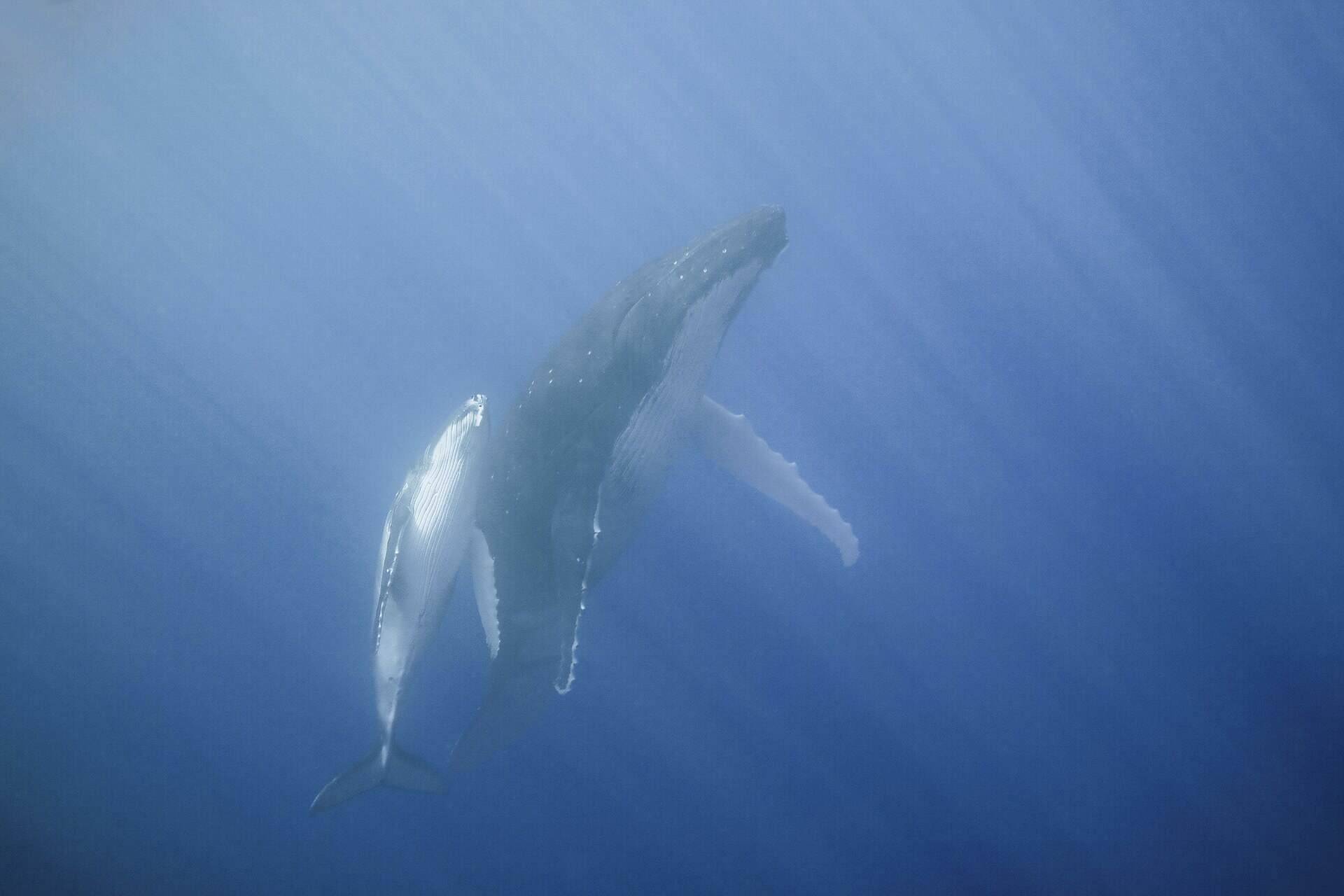
Both groups lie in the same humpback migration corridor, and the season runs roughly July through October in both places, peaking August into September. Vava'u has the established licensed swim operators, trained guides and a known code of conduct, which matters because in-water encounters are regulated and spots are limited per boat per day. Ha'apai sees whales too, sometimes in good numbers close to the main channel, but formal swim operations are far less developed, so most sightings there are boat-based rather than in-water. If swimming with a whale is the actual goal of your trip rather than a hoped-for bonus, Vava'u is the safer bet logistically; read swimming with whales in Vava'u for how the rules and odds actually work, and choosing a Vava'u whale boat before you commit to an operator.
Want a guaranteed in-water whale programme, reef-sheltered day-sailing and a town with real amenities: choose Vava'u. Want fewer boats, quieter beaches and genuine isolation, and you don't mind arranging things on the ground: choose Ha'apai.
Anchorages, sailing and the cruising ground
Vava'u's main draw for sailors is its geography: over forty anchorages packed into a compact, reef-protected archipelago, most reachable in under two hours from Neiafu. That density is what makes a week of bareboat or crewed sailing feel relaxed rather than rushed; see the anchorage-by-anchorage sailing week for how operators structure it. Ha'apai's islands are more scattered and less protected, with longer open-water passages between anchorages and fewer marked channels, which is part of why the charter industry never took root there the way it did in Vava'u. Experienced sailors with their own boat and local charts can still have an excellent time in Ha'apai; it is simply a higher-commitment undertaking than picking up a yacht in Neiafu.
Beaches, caves and what you do with your days
Vava'u's signature days are the limestone caves and swallow grottoes on its western side, best attempted on a calm morning with good light for the swim-through sections; the caves day, done right covers timing and what to skip if conditions are rough. Ha'apai's appeal is flatter, whiter and quieter: long uninterrupted sand beaches, barely any other visitors, and a slower pace built around village life rather than a roster of excursions. If your idea of a good afternoon is doing nothing on an empty beach, Ha'apai delivers that more reliably than Vava'u, where even quiet anchorages see other boats in season.
Accommodation and budget
Vava'u's range runs from simple guesthouses in Neiafu to outer-island resort-style stays, with prices for a mid-range room typically landing somewhere between 80 and 200 USD a night in peak season; see Where to Stay in Vava'u for the town-versus-outer-island trade-off, and the barefoot option on outer islands if you want something simpler. Ha'apai's options are fewer and more basic: beach-fale style guesthouses, often family-run, usually under 100 USD a night including meals, but with far less choice if your first pick is full. Book Ha'apai further ahead than you would Vava'u; there is less slack in the system to absorb a cancelled reservation.
Culture, timing and the final call
Both groups observe Sunday closures and the same kava and feast traditions that shape the rhythm of the week, covered in Feasts, Kava and Sunday. Ha'apai, with fewer visitors, tends to feel more unmediated: you are a guest in someone's village rather than a customer in a tourism economy. Vava'u offers more comfort and more certainty for a first Tonga trip. If you have ten days or more and a flexible mindset, doing both, Vava'u first for structure, Ha'apai after for contrast, is the single best way to understand the kingdom beyond the whale.